

PT Sinergi Oleo Nusantara
Add a review FollowOverview
-
Founded Date February 25, 2025
-
Sectors Writing
-
Posted Jobs 0
-
Viewed 123

Company Description
Pests Of Jatropha
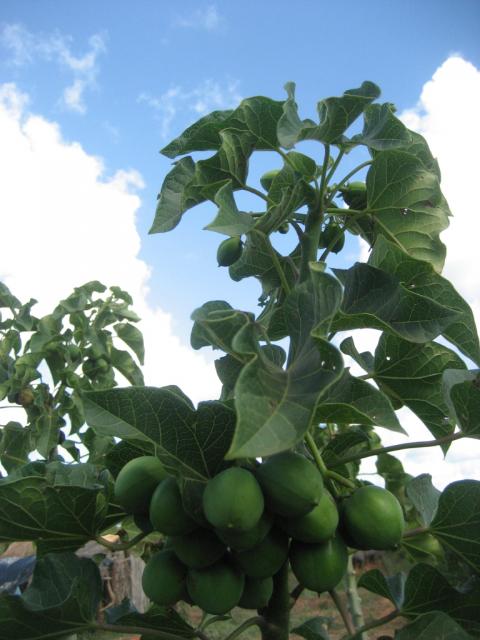
Jatropha Curcas is gaining significance commercially as the demand of nonrenewable fuel sources increases greatly and likewise Jatropha is an eco-friendly energy plantation. Plantation of this plant is thought about to be an excellent fuel replacement and it is also very economical compared to other fuels. Recently, Jatropha is facing some problem with pests and illness. The insects are classified into two ranges: Pest that affect young plants and Pest that impact developed plants.
Young plant pests: Cutworm, Scarabeid Beetle, Army worm, Grasshopper.
Agrotis ipsilon: It is frequently known as Cut worm. This bug impacts the seedlings and young Jatropha plants. If the plant is impacted by the cutworm, the stem gets cut nearer to the soil surface and this will diminished the plant entirely.
Control: This bug can be controlled by picking the larva discovered around the plants or by mixing the bran, sawdust with insecticides.
Scarabaeid Beetle: This pest ruins the root of the young plant. Initially, the larva consumes the organic matters present in the soil and then comes to the root. The larva attack may kill the entire plant.
Control: The plant with great resistance power can overcome the pest. For heavy attack, insecticides with components carbosulfan and carbofuran can be utilized to eliminate the insect.
Army worm: Spodoptera litura existence can be by biting in the leaves. The serious infection could totally eliminate the plants.
Control: Insecticides are used to control the bugs.
Grasshopper: This is common pest discovered in a number of plants. Valanga nigricornis and Locusta migratoria widely assaults the plant. The pest often assaults the young plant.
Control: The insecticides utilized betacyfluthrin, cypermethrin, thiodicarb, MIPC, and fipronil.
Pest observed in fully grown plants:

Pest of Stem: Ostrinia furnacalis, Xyleborus spp.
Ostrinia furnacalis and Xyleborus: This insect damages the Jatropha stem and it is extensively seen in Indonesia. The stem assaulted by this bug usually drop. The existence can be identified by the larva penetration hole at the stem.
Control: The Insecticide normally used to manage this pest is carbofuran.
Pest of leaf: The typical insects observed are leaf caterpillar, Neetle caterpillar, Leaf hopper, Mite, Ear corn caterpillar.
Leaf Caterpillar: This pest can consume all the leaves of the plant in other words duration. The quality and yield of the seeds get decreased due to the heavy attack.
Control: This can be controlled by choosing the old larvae around the surface area and discarding the assaulted leaves.
Needle Caterpillar: This caterpillar is covered with spinal columns and produces a burning sensation when enabled to contact with skin as it produces particular chemical substance. Initially the pest crowded in the leaf and after that spread out all over the plant when it grows older.
Control: Manually, the insect can be eliminated only by soaking it in water or kerosene. The heavy attack can be controlled by spraying organophosphate insecticides.
Leaf Hopper: This pest is found mostly in tropical and subtropical areas. The pest targets the leaf and draws all the nutrients of the leaf and gets curls at the tip. Later, the entire leaf dry and pass away.
Control: The heavy attack can be controlled by using insecticides like imidachloprid, beta cyfluthrin or carbosulfan.
Mite: Mite likewise attacks the leaf and makes the whole plant weak. The bug presence can be determined when the leaf become yellow-colored, shrinks, turns red and fall down. The pest can also be spread through fallen leaves.
Control: Some preventive procedures can be done like correct sanitation and burning the fallen leaves. Heavy attack can be dealt with by spraying insecticides.

Some awful insect which attacks flower and fruit are, Stink bug (Nezara viridula)
Chrysocoris javanus, Tip borer caterpillar.
Stink Bug: Sting bug is a severe bug which assaults the plant throughout blossom period so the crop yield completely drops. This insect is seen around the tropical region.
The toxic enzyme in the plant shrinks the whole plant.
Control: Insecticides advised for this insect is chlorfluazuron, diflubenzuron, alfamethrin, and lamda cyhalothrin.
Tip borer caterpillar: The pests frequently takes place attacks the plant in flowering season and this pest is seen extensively in tropical areas. The female insect laid the eggs on the tender part of the plant and the young larvae feed the young fruits and plant pointers.
Control: Manually, the attacked seeds are recommended to burn. The insecticides like monocrotophos and bensultap are sprayed at the flowering season.